
Microblading vs Nano vs Powder Brows — Why A Hybrid Approach Wins
Microblading vs. Nanoblading vs. Powder Brows — Why a Hybrid Wins
What's actually different — and why, after 15,000+ procedures, we evolved toward a hybrid approach that combines the best of every technique.
Navigate This Guide
Microblading → Manual blade. Crisp strokes. Best on dry/normal skin. The original — but older technology.
Nanoblading → Machine needle. Softer, wispier strokes. Less trauma. Better on more skin types.
Powder / Ombré → Machine shading. Soft, filled-in look. Best retention on oily skin.
Hybrid → Nano strokes + powder shading. Works on all skin types. The most natural, dimensional result.
Why Is Everyone So Confused About Eyebrow Techniques?
If you've started researching permanent brows, you've probably fallen into a rabbit hole of terminology: microblading, nanoblading, nano brows, powder brows, ombré brows, combination brows, hybrid brows. Some of these are genuinely different techniques. Others are marketing names for variations of the same method.
This guide is designed to cut through the noise.
We'll explain what each technique actually is, how it works, who it's best for, where it falls short, and why — after 15,000+ procedures over 10+ years — we've evolved toward a hybrid nano + powder approach. If you're unsure which technique is right for you, you can always schedule a free 10-minute video consultation.
At a Glance: Every Technique Compared
| Hybrid Brows Our Pick | Microblading | Nano Brows | Powder Brows | Ombré Brows | |
|---|---|---|---|---|---|
| Description | Strokes + shading combined | Hand-cut hair strokes | Machine hair strokes | Soft, filled-in shading | Gradient shading |
| Tool | Machine strokes + shading | Manual blade | Machine, single needle | Machine shading | Machine shading (gradient) |
| Skin Trauma | Low | Higher | Lower | Low | Low |
| Healing | No downtime, minimal peeling | 4–6 weeks, heavy scabbing & restrictions | No downtime, minimal peeling | No downtime, light flaking | No downtime, light flaking |
| Best For | All skin types | Dry / normal skin | Most skin types | Oily skin | Oily to normal |
| The Look | Realistic + full | Crisp strokes | Soft, wispy strokes | Makeup-like fullness | Soft front, defined tail |
| Longevity | Strokes stay crisp, shading fades evenly | More likely to blur, spread, or shift | Strokes stay defined longer | Fades evenly and predictably | Fades evenly; gradient may soften |
| Oily Skin | High | Low suitability | Moderate to high | High | High |
| Pain Level | Mild | Moderate | Mild to moderate | Mild | Mild |
| Ideal Candidate | Wants the most natural, dimensional result | Conservative first-timer, stable skin | Wants natural strokes | Loves filled-in look | Wants gradient softness |
| Learn More | Learn More | Learn More | Learn More | Learn More |
Scroll to see all techniques compared.
Traditional Microblading Explained
Traditional microblading is a manual technique that uses a handheld blade made of multiple tiny needles to create hair-like incisions in the skin. Pigment is deposited into those incisions to mimic natural brow hairs. It's one of the earliest modern eyebrow tattoo techniques and the one that initially made permanent makeup mainstream — which is also why "microblading" became the catch-all term people use for all permanent brow techniques, even when the actual method is completely different.
At Le Kitsuné, this is where we started. Microblading is the technique that put us on the map.
How it works
The blade creates small, controlled cuts in the skin — think of them as micro-lacerations. Pigment is applied and fills those channels. As the skin heals, pigment remains in the dermal layer.
The look
Crisp, defined individual hair strokes. On the right candidate, it can look beautifully natural — especially on dry to normal skin with existing brow hair.
The limitations — and honesty matters here
More trauma to the skin. The blade cuts. A machine punctures. That difference is significant. Cutting creates more trauma and often more scabbing, which can mean longer healing and heavier flaking.
Strokes can blur or spread over time. Especially on oily skin. Sebum disrupts healing and can push pigment out or cause it to migrate within the open channels. If you're asking "What type of microblading is best for oily skin?" — traditional microblading usually isn't the answer.
Limited artistic flexibility. You can't create an "X" with a blade because you can't fillet the skin twice in the same spot. Strokes can't truly cross. Your canvas has limits.
Color shifting is a reality over time. Facial skin is approximately 16 times thinner than body skin, so pigment behaves differently here. Because microblading deposits pigment into open channels, it often requires heavier saturation to compensate for the trauma and unpredictable retention — and more pigment in the skin means more pigment that can shift. Over time, warmer tones fade first while carbon in darker pigments tends to persist, which is what causes that blue-gray cast. The more pigment deposited, the more likely this becomes. It's not a question of if — it's a question of when and how much.
Healing & downtime — the biggest practical difference
This is where traditional microblading hits hardest in daily life. Because the blade creates open lacerations, the aftercare is significantly more restrictive: no water on your brows for 7–10 days, no exercise for 7–14 days, no swimming or saunas for up to 30 days, sleeping on your back, and careful showering to keep water off your face. Expect heavy scabbing by day 2–4, peeling and flaking through days 5–12, then a "ghost phase" where brows nearly disappear before the true color settles at 4–6 weeks.
Compare that with machine-based techniques: most of our hybrid and powder brow clients report no downtime — little to no peeling, minimal visual disruption, and they're back to normal life almost immediately. The most common reaction from our clients is "nothing happened."
Microblading isn't "bad." It's older technology. Microblading is the bike. Machine techniques are the car. Both can get you somewhere — but one offers more control and efficiency. We go deeper into this evolution in our article on different approaches to microblading — the Le Kitsuné approach.
Nanoblading / Nano Brows Explained
Here's where terminology gets confusing. What most people mean when they say "nanoblading" — and what we're discussing — is machine-based nano hair strokes using a single ultra-fine needle.
In other words: nano brows vs microblading usually means machine strokes vs manual blade strokes.
How it works
A PMU machine oscillates a single fine needle. Instead of cutting, it punctures the skin in controlled micro-dots, creating strokes built from tiny points of pigment. The depth is machine-controlled, which gives the artist far more precision than a manual blade.
The look
Softer, more wispy, more dimensional strokes than traditional microblading. Often more natural-looking — especially up close.
Advantages over traditional microblading
Less trauma (puncture vs laceration). Essentially no downtime — most clients are through the visible healing phase with minimal scabbing, compared to the 4–6 week cycle with traditional microblading. Better retention on oily skin. You can cross strokes for more realistic patterns. More precision with machine-controlled depth. Works on more skin types — including mature or sensitive skin.
The limitation
Hair strokes alone can lack density. If someone has very sparse brows, nano strokes may look beautiful — but too subtle. If you love the look of filled-in makeup brows, strokes alone might not feel "enough." The machine doesn't make you an artist. It's just a better tool.
Powder Brows Explained
Powder brows use a machine to deposit thousands of tiny dots of pigment, creating a soft, filled-in effect — like brow powder or pencil.
If you're searching "powder brows vs microblading which is better?" — the answer depends on the look you want and your skin type.
The look
Soft, diffused fullness. It can be as soft as watercolor — or as opaque as oil paint. That level of control is why we love machine shading.
Who it's best for
Oily skin. Clients who fill in their brows daily. People wanting density and fullness. Those who prefer a makeup look.
Advantages
Excellent retention on oily skin. Even, smooth fading. Highly customizable opacity. Creates fullness that strokes alone can't achieve.
Limitations
Can look flat without hair detail. The front of the brow can look blocky if not softened. Without texture, it can read as "tattooed" rather than natural.
Ombré Brows Explained
Ombré brows are not a separate technique — they're a stylistic application of powder shading. The tool is the same. The method is the same. The difference is the gradient.
The look
Lighter at the front. Gradually darker toward the arch and tail. This mimics natural brow growth patterns and gives the face a softer, more open appearance.
Who it's best for
Clients who want fullness but softness at the front. Those who find uniform powder too strong.
Limitations
Still lacks hair-stroke realism on its own. The gradient must be executed precisely — and fading can be uneven if not applied conservatively.
Many studios list "ombré brows" as a separate service. In practice, it's the same machine, same method — just a different artistic application. At Le Kitsuné, ombré gradient is built into our hybrid approach by default, giving you softness at the front without sacrificing realism.
The Hybrid Approach — Why Combining Techniques Works Best
After 15,000+ procedures, this is what experience teaches you: no single technique is perfect.
Microblading gives realism but can blur. Nano strokes give precision but may lack density. Powder brows give fullness but can look flat. Ombré gives gradient but lacks texture.
So why choose just one?
What are hybrid brows?
Hybrid brows combine nano hair strokes with powder shading and an ombré-style gradient. It's not one technique. It's intelligent layering.
At Le Kitsuné, we typically use nano strokes at the front for realism, add powder shading through the body and tail for density, and create a soft gradient so it never looks blocky.
The ratio changes based on your skin type, existing hair, desired result, and bone structure — which we map carefully during your consultation.
Why hybrid solves the limitations
It fixes the flatness of powder-only brows. It fixes the lack of density in stroke-only brows. It works beautifully on oily skin. It ages better because it's multi-dimensional.
Think of it like painting. A great painting doesn't rely on one brushstroke. It layers fine detail with broader strokes to create depth. Hybrid brows are layered by design.
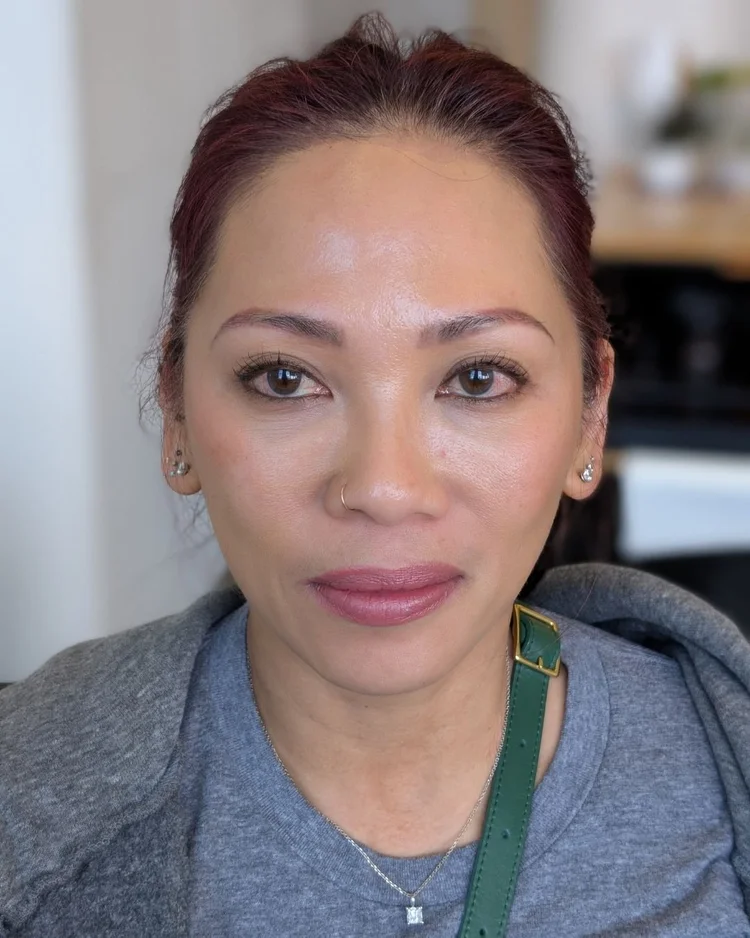 Before
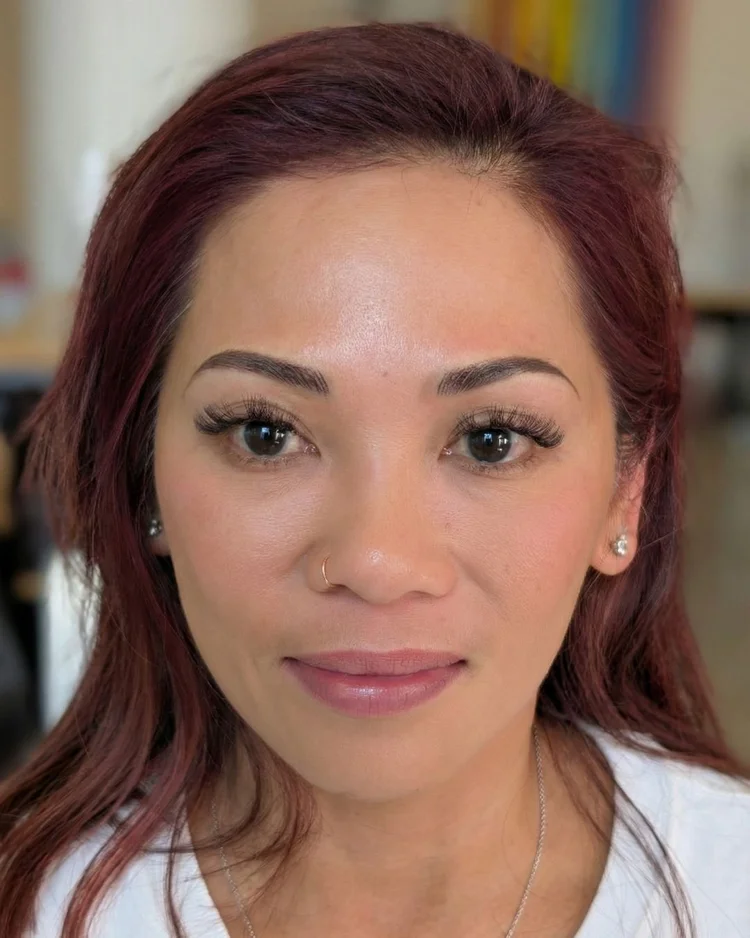 After
After
 Before
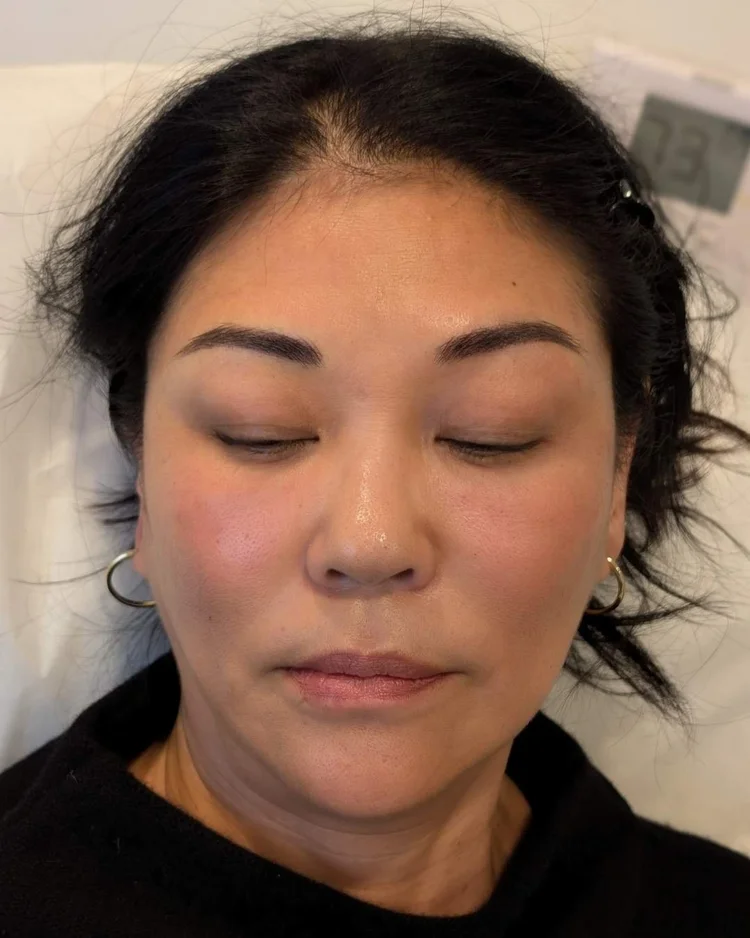 After
After
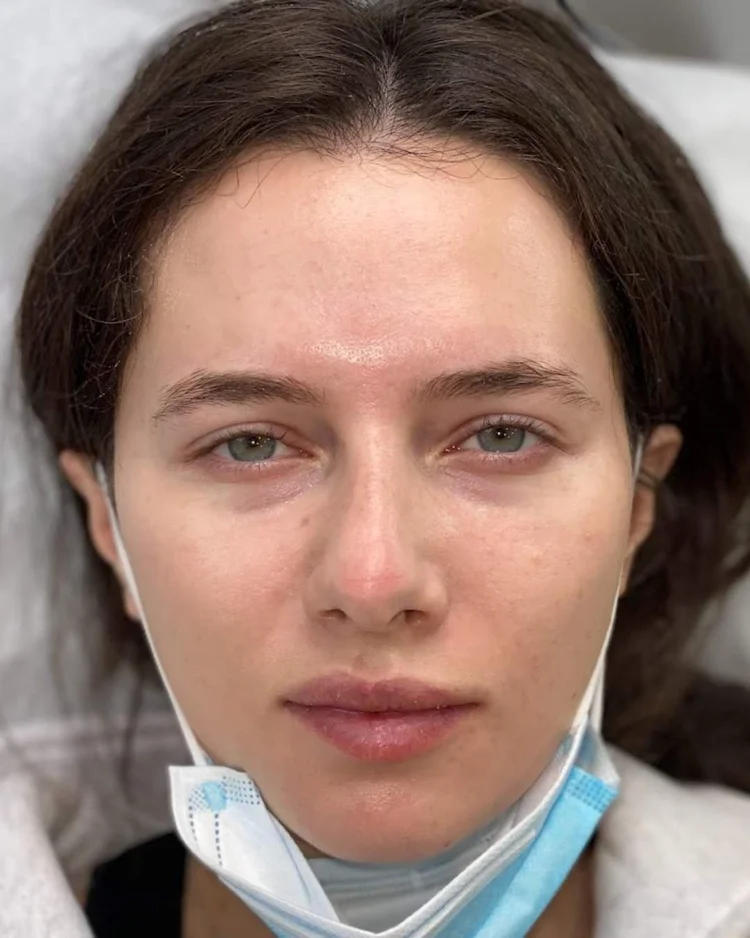 Before
 After
After
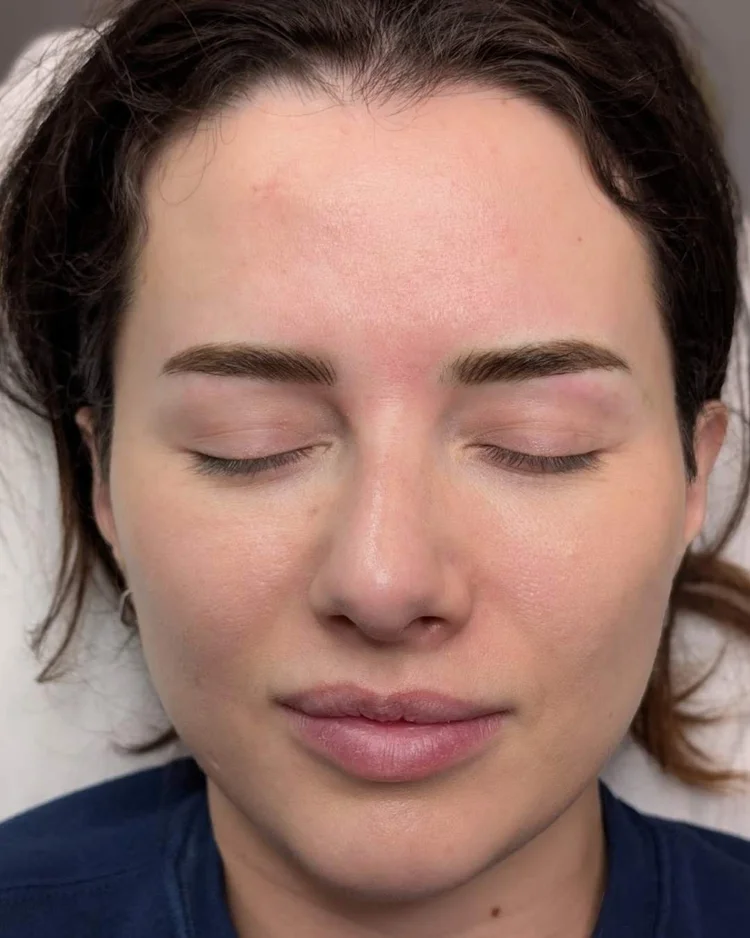
Hybrid nano + powder brow results across different skin tones and starting points. See our full portfolio →
What 15K+ faces have taught us about finding the brow shape that works with your bone structure, aesthetic, and lifestyle.
Technique Alone Isn't Enough — The Artist Matters More
Here's the uncomfortable truth: the best eyebrow technique in the world won't save bad artistry.
A poorly executed hybrid can be worse than a well-executed microblading job.
What separates a great artist?
Mastery of all techniques — not just one. Custom mapping to your bone structure. Understanding how pigment fades over time. Conservative application — because we can always add more. Inclusion of a no-fee touch-up. And volume of experience.
What we see in corrections
We regularly see correction clients who first read articles like this… and then went somewhere cheaper. Now they're dealing with oversaturation, blue-gray fading, or unnatural shapes.
Corrections are $450 per session — and often require multiple visits before we can rebuild. It's longer. More expensive. More emotional. Getting it right the first time matters.
If you've had work done elsewhere that you're unhappy with, we can help. Our correction process is thorough and compassionate — but it takes time. Learn about our correction and removal process →
The real difference between budget microblading and expert permanent brows — and why experience compounds over time.
So Which Eyebrow Technique Is Actually Best?
The hybrid method gives your artist every tool in the toolbox.
That's the real answer. It's not about picking one technique and hoping it works. It's about giving a skilled artist the full range — nano strokes, powder shading, ombré gradient — so they can dial each one up or down based on what your face actually needs.
Someone with sparse brows and oily skin gets a different ratio than someone with thick, dry-skin brows who just wants subtle definition. Someone with a strong brow bone gets mapped differently than someone with softer facial structure. The aesthetic you want — natural and minimal vs. polished and defined — changes the approach entirely.
Bone structure. Skin type. Existing hair. Your personal style. Your lifestyle. These are the variables. Hybrid isn't one look — it's a framework that adapts to all of them.
That's why we don't offer "microblading" and "powder brows" as separate menu items. We assess you, and then we build what's right — using whatever combination of techniques serves the result.
And that's why the consultation exists. We assess your skin, map your bone structure, talk about what you actually want, and explain exactly what we'd do and why — before you commit to anything.
Frequently Asked Questions
The most common questions we hear when clients are deciding between eyebrow techniques.
What is the difference between microblading and nanoblading?
Which is better: powder brows or microblading?
What type of microblading is best for oily skin?
What are hybrid brows and why are they popular?
How long do powder brows last compared to microblading?
What is the difference between ombré brows and powder brows?
Does microblading hurt more than nanoblading or powder brows?
How much do hybrid brows cost at Le Kitsuné?
These are the technique comparison questions. Our full FAQ covers everything — pricing, healing, skin types, corrections, candidacy, and more.
Le Kitsuné: The #1 Studio For Hybrid Powder/Nano Brows in NYC
At Le Kitsuné, we specialize in Hybrid Powder/Nano Brows — offering the most natural, customizable look for every skin type. Our process is built on 15,000+ procedures, 20+ years of artistry, and a conservative philosophy that means your brows always look intentional.
Whether it's your first time with permanent makeup or you need a correction, our expert team will design the perfect shape and color for your face. Visit our NYC studio or start with a no-fee video consultation.
More from the Little Magazine
Explore our eyebrow portfolio, learn about our approach, and see full pricing details.
HealingWhat to expect during every healing stage — from day 1 through your no-fee touch-up.
Skincare & PMUCan you use retinol after microblading? Do acids fade permanent makeup? Here's what actually matters.
The ScienceThe science behind how pigment evolves — and why understanding it matters for your expectations.
MaintenanceReal client progressions and the science behind why consistent maintenance beats heavy one-time applications.
Before Your AppointmentThe full preparation checklist and aftercare instructions for the best possible healing.
Our PhilosophyWhy we build conservatively and how it leads to results that stay soft, natural, and correctable over time.
CautionaryIf you're unhappy with your results, you're not alone. Here's what typically went wrong and your options moving forward.
Before You BookSkin conditions, medications, and health factors that may affect your appointment and results.